Understanding pulmonary arterial hypertension (PAH)
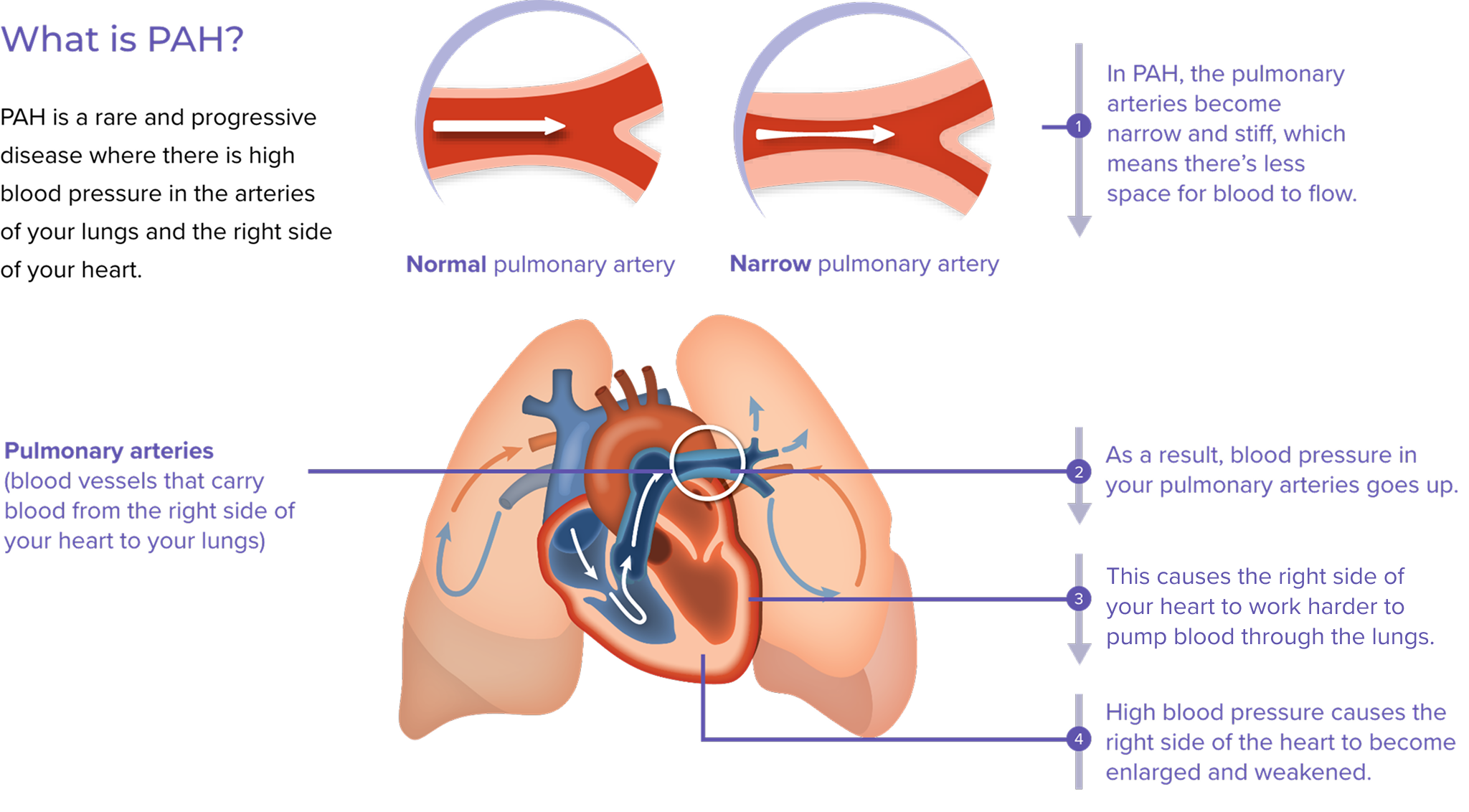
What are the signs and symptoms of PAH?
PAH can lead to a wide range of symptoms that may develop slowly over time. Most people with PAH begin to notice symptoms as the condition progresses.
Symptoms of PAH include:

Tiredness
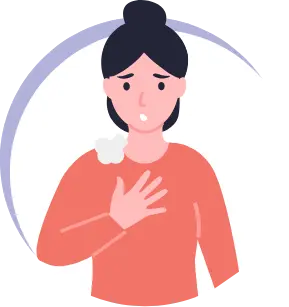
Shortness of Breath
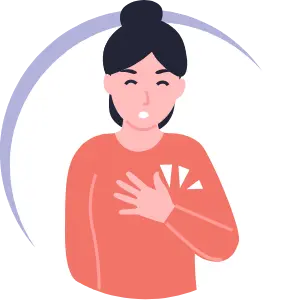
Chest Pain or Pressure

Fainting

Dizziness

Rapid Heartbeat
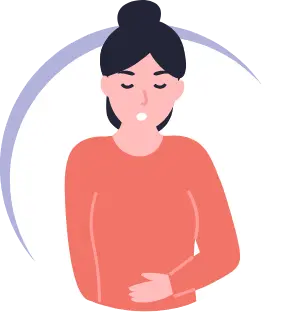
Swollen Abdomen
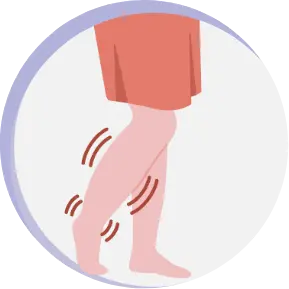
Swollen Legs and Ankles
How is PAH diagnosed?
Your doctor may perform several tests to see what's happening inside your body:

Electrocardiogram (EKG or ECG) to measure the electrical activity of your heart
Pulmonary function test (PFT) to see how well your lungs are working

6-minute walk test (6MWT) to see how far you can walk in 6 minutes

Echocardiogram (echo) to check the size and function of your heart

Chest x-ray and ventilation perfusion scan (VQ scan) to get images of your heart, lungs, and blood vessels
Right heart catheterization (RHC) to measure the pressure inside your heart and the blood vessels of your lungs
RHC IS THE MOST CONCLUSIVE WAY TO DIAGNOSE PH.
How are the effects of PAH on everyday activities measured?
A functional class assessment can help your doctor understand how much PAH affects your everyday activities.
The functional classes are defined as follows:
| NYHA Functional Class I | No limitations on physical activity. Ordinary physical activity doesn't cause shortness of breath, fatigue, chest pain, or near fainting. |
| NYHA Functional Class II | Some limitations on physical activity. Although comfortable at rest, ordinary activity causes shortness of breath, fatigue, chest pain, or near fainting. |
| NYHA Functional Class III | Clear limitations on physical activity. Although comfortable at rest, even less than ordinary activity causes shortness of breath, fatigue, chest pain, or near fainting. |
| NYHA Functional Class IV | Any level of physical activity is uncomfortable. There may be signs of heart failure, and shortness of breath and/or fatigue may be present even when resting. |
NYHA = New York Heart Association
How PAH therapies work
Doctors treat PAH using medicines that aim to restore balance among 1 or more of 3 substances that are produced by your lungs: prostacyclin, nitric oxide, and endothelin.
The right amount of each substance helps keep pulmonary arteries open and blood flowing through the lungs.
IN PAH, 1 OR MORE OF THE 3 SUBSTANCES ARE OUT OF BALANCE, CAUSING PULMONARY ARTERIES TO NARROW:



PAH THERAPIES HELP OPEN PULMONARY ARTERIES BY:



*Two types of therapies, called phosphodiesterase-5 inhibitors and soluble guanylate cyclase agonists, work in a similar way to increase nitric oxide to open blood vessels.